
Transitioning to a new warehouse (partner) can be a challenging process and brings up a lot of questions from all departments within your organization. Although this can be intimidating if you are in charge of the End to End supply chain it should not withhold you to continue with the plan.
Having a trusted partner like Blackbox improvement that has experience with warehouse transitions will support you to manage the transition strategy and operational implementation of your new warehouse.
For our multinational client with multiple product streams we have consolidated 3 (cold chain) warehouses towards 1 warehouse, within the region of Amsterdam (Netherlands) during the period of 2024. We did this by limiting transition cost and limited production- and business risk.
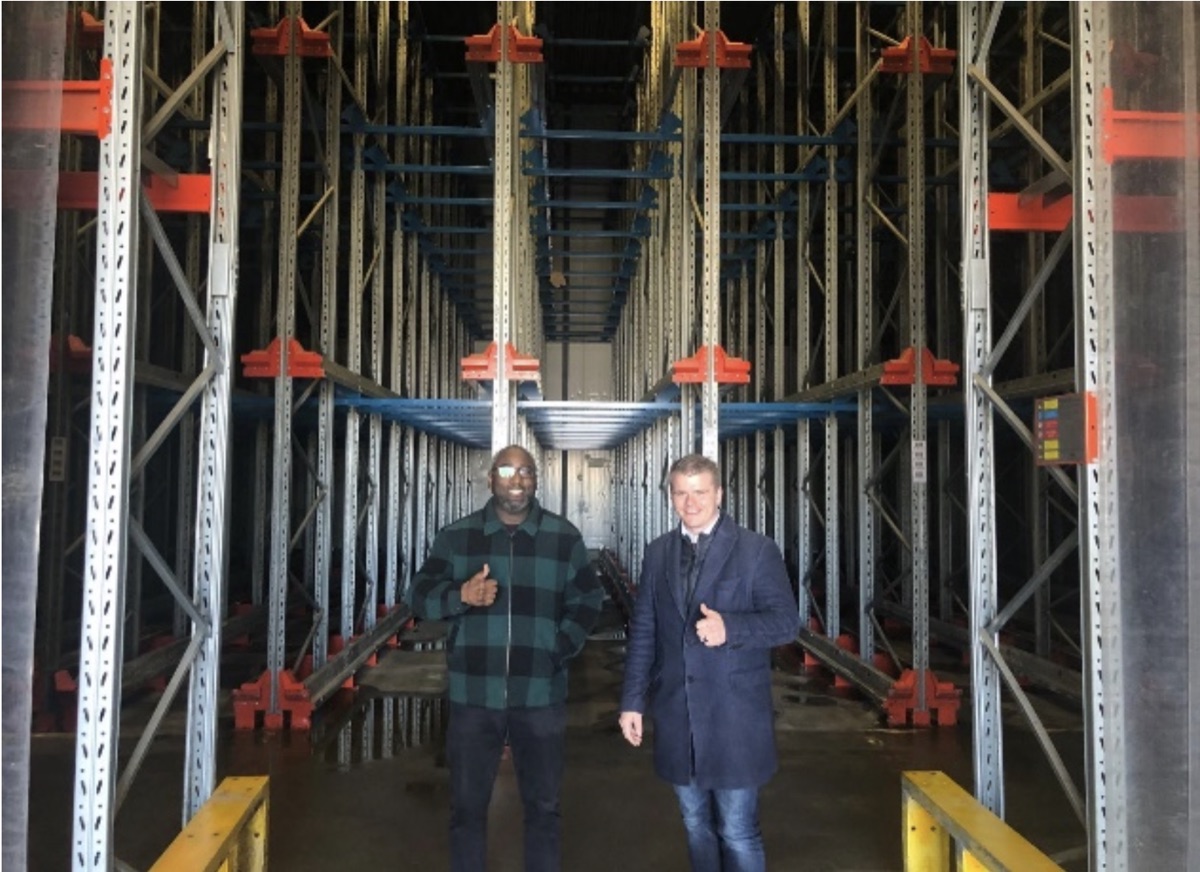
This warehouse transition, was rather special as we were to go from a traditional racking system third party towards a fully automated new build warehouse.
What did we do
This warehouse transition, was rather special as we were to go from a traditional racking system third party towards a fully automated new build warehouse. In addition to the transition we have designed the logistics flow for this new warehouse.
A warehouse transition starts, within our philosophy, by describing the current logistics flows per material type. In this case we faced in general 4 specific logistics flows with 3 product categories. For our production flows we have chosen a cost effective strategy of “slow consumption”, meaning facing out the warehouse by natural progression. This works out if the inbound raw material flow is transitioned first towards the new warehouse. The result of this is that the new warehouse is getting filled slowly enabling them to slowly pick up the logic flow towards the production facility. This strategy works perfect for production facilities, as it gives the new warehouse and the production facility time to get used to processes and the product.
Once the new warehouse had proven they can perform according the SLA, we started transitioning the finished product. This flow is transitioned with a big bang, as we did not want to confuse customers and order management colleagues in pick up locations.
Start transitioning finished product was an important milestone in the transition, as every mistake by the new warehouse partner is directly impacting the customer when done wrong. Besides that, we saw also quick development in the utilization of the warehouse capacity of the old warehouse partner. Normally this is a moment were the old warehouse partner starts lacking the current SLA and tries to squeeze out as much money as possible still. Luckly we were on board here and we could help cancelling this collaboration the correct way, preventing a huge back fire in settlement cost.
Once these two strategies are running the old warehouses will slowly gets emptier by the week whereas the new warehouse gets more and more utilized. To make sure the new warehouse partner keeps performing once the utilization grows we actively involved them in KPI tracking according the SLA standard. Were they performing under SLA standard, we slowed down the transition speed, whereas a good performance triggered a quicker transition.
Last step in the transition is the slow- zero moving stock, which will not be transitioned if not consumed with the strategy we have chosen. This gave the organization the chance to clean up the old stock, which gives a fresh start with the new warehouse partner. We always advice to take this last step, as material holding cost can be a killer on the OPEX in your organization.
Results
Due to the fact that our client had onboarded us on time for the whole project period, we could successfully support in the whole scope of a warehouse transition. This means that we reached exceptional results for our client:
- limit settlement cost
- stock clean up
- no business impact
- interface design
- limiting transition cost
- contract and SLA creation
It can be underestimated which cost are involved with a warehouse transition of this scope (~25.000 pallets). For example if our client had chosen for a full big bang strategy they would have paid over EUR >500k+ only in transition cost for transportation and in-outbound.

Arjan Veldhuizen
CEO / Founder of Blackbox Improvement